

Sushi at Doorsea: Rolls, Nigiri and More
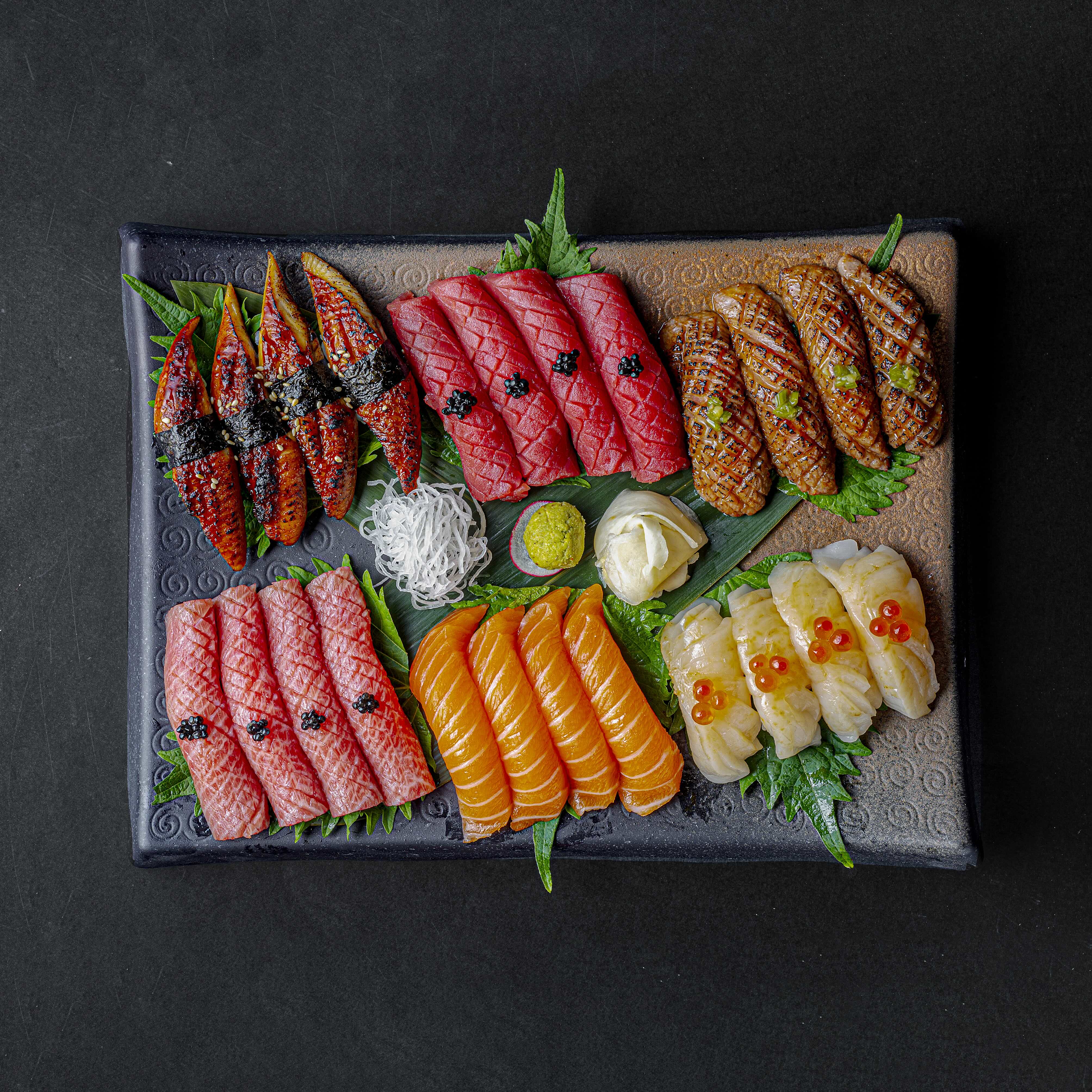
Sushi at Doorsea: Rolls, Nigiri and More
What Is the Difference Between Sushi and Rolls?
Sushi brings together a remarkable variety of shapes, ingredients and ways of serving. At the heart of this variety is a shared foundation: rice seasoned with vinegar, paired with fish, seafood, vegetables or other ingredients. Soy sauce, wasabi and pickled ginger are its familiar companions. [1]
Rolls belong to this wider family, alongside nigiri, gunkan and hand rolls. Hosomaki is a slender variety of roll. Each form offers a different balance of rice and filling, creating its own experience of flavour and texture.
A few simple distinctions make the menu easier to explore.
- Rolls combine rice and filling in a rolled cylinder, usually with nori. They are commonly sliced into six to eight pieces, with the size and combination of ingredients varying by style.
- Nigiri consists of a small, hand-shaped mound of rice topped with fish or seafood. An illustrative proportion is around 10 g of rice and 15 g of fish, although the balance varies with the ingredient and preparation.
- Hand rolls bring rice and filling together inside nori, shaped by hand into a cone or cylinder. They are served whole and eaten by hand.
- Gunkan has a small base of rice surrounded by a band of nori, which rises above the rice to hold the topping.
- Hosomaki are thin rolls, typically made with half a sheet of nori and one main filling. Their simple composition lets the central ingredient express its character clearly.
A Brief History of Sushi
Long before refrigeration, preserving fish called for ingenuity. One early method used salt and rice to ferment fish. This tradition, known as narezushi, is thought to have reached Japan from mainland Asia. In its older forms, the rice played a role in preservation and was discarded before the fish was eaten.
Over time, fermentation periods became shorter and rice became part of the meal. Later, vinegar-seasoned rice made faster preparation possible. During the Edo period, nigiri became a popular urban food in Edo, today’s Tokyo: hand-shaped rice with a topping, served at street stalls. [4][5]
During the twentieth century, sushi gained an increasingly international audience. New ingredients and combinations appeared, adding further variety to a tradition that had already developed many regional forms.
Wasabi and pickled ginger became familiar parts of the experience too. Wasabi brings aromatic heat, while ginger is traditionally enjoyed between different pieces to refresh the palate and make their individual flavours easier to appreciate. [1]
Preparation at Doorsea
At Doorsea, sushi brings together distinctive flavours, thoughtful combinations and careful attention to ingredient quality.
The balance begins with rice and continues through every detail of the preparation. The texture of fish or seafood, the savoury depth of nori and the character of each accompanying ingredient all contribute to the finished dish.
This attention allows familiar ingredients to reveal themselves in different ways, from a simple maki to a more generous combination of flavours.
Nutritional Value and the Ingredients Behind It
Our sushi selection offers a wide variety of fillings. Each brings its own flavour and texture, together with a distinct nutritional composition.
The tables give reference values for 100 g of the specified raw ingredient. Composition varies, and the rice, sauces and preparation shape the nutritional profile of each finished dish.
Salmon
Salmon combines a rich, smooth texture with a valuable range of nutrients. These include vitamins D and B12: vitamin D supports calcium absorption and bone health, while B12 is important for normal nervous-system function and red blood-cell formation. [6][7]
It also contains vitamins E and K, alongside minerals such as selenium, phosphorus, potassium and magnesium. Selenium contributes to normal thyroid function and the body’s protection against oxidative damage. [6][7]
Salmon is also known for its omega-3 fatty acids, including EPA and DHA. These are components of cell membranes, with DHA particularly important in the brain and retina. [6][8]
| Nutrient | Amount |
|---|---|
| Energy | 193 kcal |
| Protein | 20.5 g |
| Fat | 12.4 g |
| Carbohydrates | Trace amounts |
| Vitamin D | 4.92 µg |
| Vitamin B12 | 3.95 µg |
Scallop
Scallop offers delicate sweetness, a tender texture and high-quality protein with essential amino acids. Its naturally low fat content gives it a comparatively lean nutritional profile. [6][9]
Scallops also contain small amounts of marine lipids and naturally occurring compounds such as taurine. Together, these add nutritional interest to an ingredient often appreciated first for its gentle flavour. [9]
| Nutrient | Amount |
|---|---|
| Energy | 83.6 kcal |
| Protein | 17.9 g |
| Fat | 0.84 g |
| Carbohydrates | 1.15 g |
Eel
Eel brings a fuller flavour and a soft, rich texture. Its fat includes omega-3 fatty acids such as EPA and DHA, which form part of the body’s normal cellular structures and functions. [8][10]
Japanese eel is also notable for its vitamin A content. This vitamin supports normal vision, immune function and the maintenance of tissues, including the skin and mucous membranes. Eel also provides vitamins D and E, together with selenium. [7][10]
Vitamin A is needed in small amounts, and excessive intake can be harmful. For context, the EU adult labelling reference is 0.8 mg per day; individual requirements vary. [11][12]
| Nutrient | Amount |
|---|---|
| Energy | 228 kcal |
| Protein | 17.1 g |
| Fat | 19.3 g |
| Carbohydrates | 0.3 g |
| Vitamin A | 2.4 mg |
Sea Bream
Sea bream combines a delicate flavour with a gently firm texture. It provides protein and contributes minerals such as selenium and phosphorus. [6]
Selenium plays a role in normal thyroid hormone metabolism. Phosphorus is a component of bones and teeth and is involved in the body’s energy processes. These are normal nutritional functions to which a varied diet contributes. [7][15]
| Nutrient | Amount |
|---|---|
| Energy | 129 kcal |
| Protein | 20.9 g |
| Fat | 5.1 g |
| Carbohydrates | Trace amounts |
Kagoshima Wagyu A5
Alongside fish and seafood, Doorsea offers sushi with Japanese Kagoshima Wagyu A5.
Its distinctive marbling—the fine network of fat within the meat—gives the beef remarkable tenderness and a rich, almost creamy texture. Paired with rice, it brings softness, depth and a generous expression of flavour.
Wagyu also contains a substantial proportion of monounsaturated fats, including oleic acid. Monounsaturated fats can help lower LDL cholesterol when they replace saturated fats within the overall diet. [13][14]
The result is another way to explore the possibilities of sushi: the same foundation of seasoned rice, given a different character by the ingredient it accompanies.
Sources
- Japan National Tourism Organization — Sushi in Japan Guide
- Sushi University, Japan — Types of Sushi
- Ginza Kyubey — History
- Japan’s Ministry of Agriculture, Forestry and Fisheries — Fishery Fermented Food
- Japan’s Ministry of Agriculture, Forestry and Fisheries — Nigiri Zushi
- ANSES. 2025. Ciqual Food Composition Table: farmed salmon, raw (26036); scallop meat without roe, raw (10045); farmed gilthead sea bream, raw (26088).
- European Food Safety Authority — Dietary Reference Values for Nutrients: Summary Report
- European Food Safety Authority — Dietary Reference Values for Fats
- Manthey-Karl and colleagues, Max Rubner-Institut, Germany — Meat Composition and Quality Assessment of King Scallops and Frozen Atlantic Sea Scallops (2015)
- Japan’s Ministry of Education, Culture, Sports, Science and Technology — Japanese Eel, Cultured, Raw (10067), Standard Tables of Food Composition in Japan, 2023 Supplement
- European Food Safety Authority — Tolerable Upper Intake Level for Preformed Vitamin A and β-Carotene (2024)
- European Union — Regulation 1169/2011, Annex XIII: Nutrient Reference Values
- Yoshimura and colleagues — Fatty Acid Composition of Intramuscular Fat in Japanese Black Cattle in Kagoshima (2018)
- European Food Safety Authority — Replacing Saturated Fats with Unsaturated Fats and Blood LDL Cholesterol
- Latvia’s Centre for Disease Prevention and Control (SPKC) — Healthy Eating Recommendations for Adults