

Akami Tuna: Flavour, Texture and Nutrition | Doorsea Riga
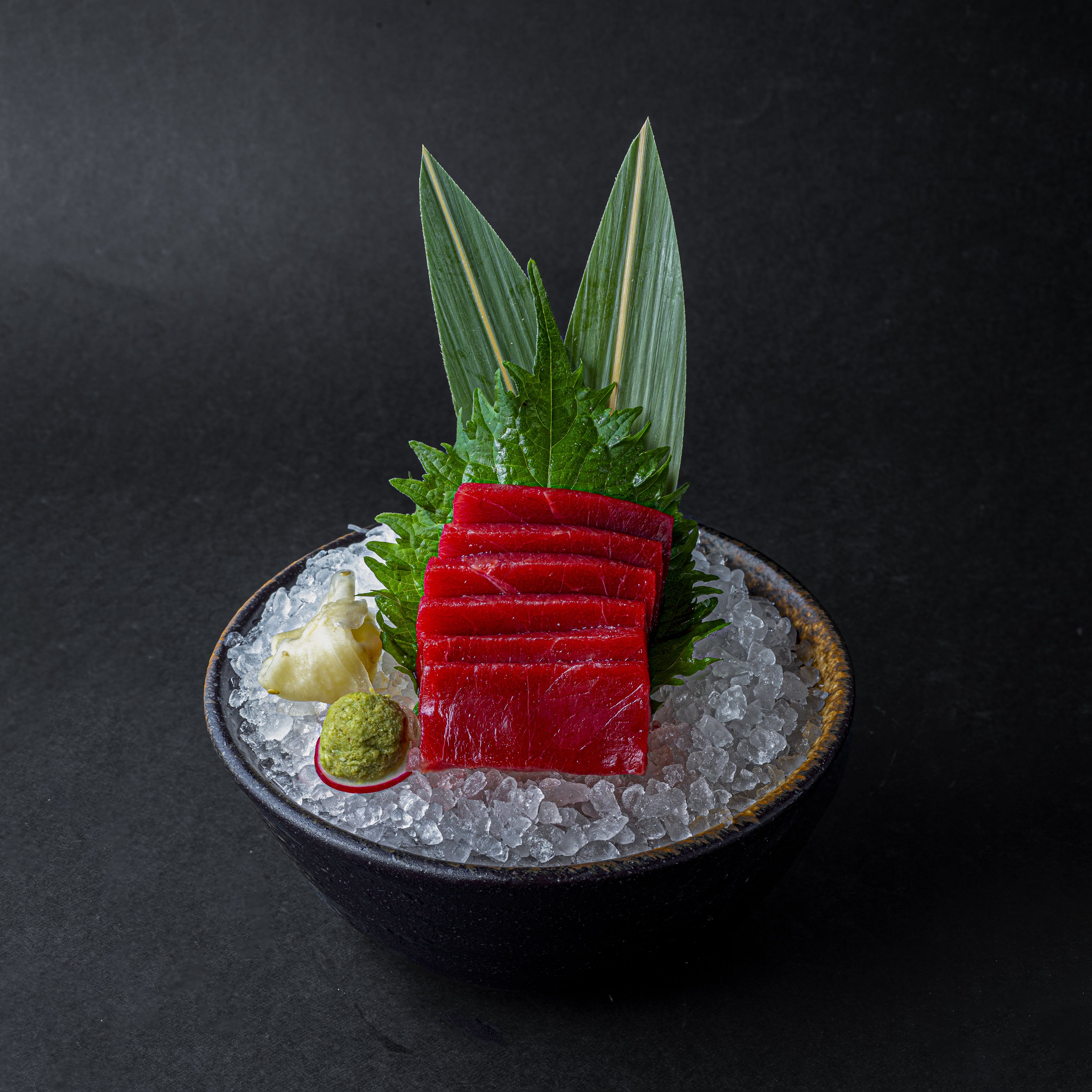
Akami Tuna at Doorsea Restaurant
Bluefin tuna is one of the most highly regarded ingredients in Japanese cuisine, appreciated for its rich flavour, delicate texture and remarkable variety within a single fish.
What is less obvious is that, in Japanese cuisine, tuna is commonly described through several principal categories based on where the meat is located and how much fat it contains. Three names appear particularly often: Otoro, Chutoro and Akami.
Understanding the difference between them reveals just how diverse one tuna can be.
Otoro, Chutoro and Akami: What Is the Difference?
Otoro comes from the fattiest part of the tuna belly. Its abundant marbling gives the meat its characteristic pale-pink colour, exceptionally tender texture and rich flavour.
Chutoro, typically taken from areas of the belly and side of the fish, sits between Otoro and Akami. It combines noticeable marbling with a more pronounced tuna flavour.
And then there is Akami — the part at the centre of our story.
Akami is the lean, deep-red meat found along the backbone of the tuna. Compared with the fatty belly sections, its texture is firmer and its flavour cleaner and more distinctly characteristic of tuna.
With considerably less fat than the belly sections, Akami represents the naturally leaner side of bluefin tuna while retaining the protein-rich character associated with tuna.
Why Is Akami So Deep Red?
The colour itself tells us something interesting about the fish.
Bluefin tuna are powerful pelagic swimmers whose muscles require a steady supply of oxygen. Their muscle tissue therefore contains high concentrations of myoglobin — the oxygen-binding protein responsible for Akami’s characteristic deep-red colour.
This is one of the details that makes tuna so visually distinctive from many other fish used for sushi and sashimi.
Why Is Akami Often Served Raw?
At Doorsea, Akami appears in dishes where its natural character can remain at the centre of the experience.
Serving it raw preserves its firm yet tender texture, clean flavour and characteristic deep-red appearance. Rather than transforming the ingredient through cooking, dishes such as sashimi and nigiri allow subtle differences in texture and flavour to remain clearly perceptible.
For fish intended to be served raw, careful sourcing, temperature-controlled storage and professional handling throughout the supply chain are essential.
Freshness is only one part of the equation. Consistency and careful handling matter just as much.
What Does Akami Offer Nutritionally?
Bluefin tuna naturally provides high-quality protein, omega-3 fatty acids, vitamin D and vitamin B12.
Akami is particularly interesting because it represents the leaner side of the fish. Compared with the heavily marbled belly sections, it contains considerably less fat while retaining the protein-rich character associated with tuna.
The precise nutritional composition of tuna can vary according to species, individual fish and the particular part being analysed. Nutritional figures are therefore best understood as reference values rather than an exact description of every serving.
Akami on the Doorsea Menu
One of the pleasures of Akami is how differently the same ingredient can express itself depending on the preparation.
At Doorsea, you can discover Akami in tartare, carpaccio, sashimi, gunkan, taco sushi, nigiri and rolls.
For guests who would like to explore tuna in several forms during one meal, the Tuna Set brings together a wider selection of dishes featuring Akami.
The ingredient remains the same.
The experience changes with every preparation.
A Different Side of Bluefin Tuna
Otoro often attracts attention with its extraordinary richness and marbling. Akami offers another perspective on the same remarkable fish.
It is leaner, deeper in colour and more direct in flavour.
Neither needs to be considered better than the other. They simply reveal different characteristics of bluefin tuna — and understanding those differences makes tasting them more interesting.
Sometimes discovering an ingredient begins with something as simple as knowing which part of the fish is on your plate.
Nutritional Reference
Published reference for Western Atlantic bluefin tuna — per 100 g raw:
144 kcal
Protein: 23.33 g
Fat: 4.9 g
Carbohydrates: 0 g
Source: NOAA Fisheries. These values are provided as a general reference and do not represent the precise nutritional composition of a particular Doorsea serving.
Discover Akami at Doorsea
If you would like to experience these differences for yourself, we will be glad to welcome you at Doorsea.
Doorsea Restaurant
Antonijas iela 9, Riga
Phone:+371 28 702 317
Reserve your table at Doorsea and discover Akami for yourself.