

Why Do Oysters Taste Different?
Why Do Oysters Taste Different?
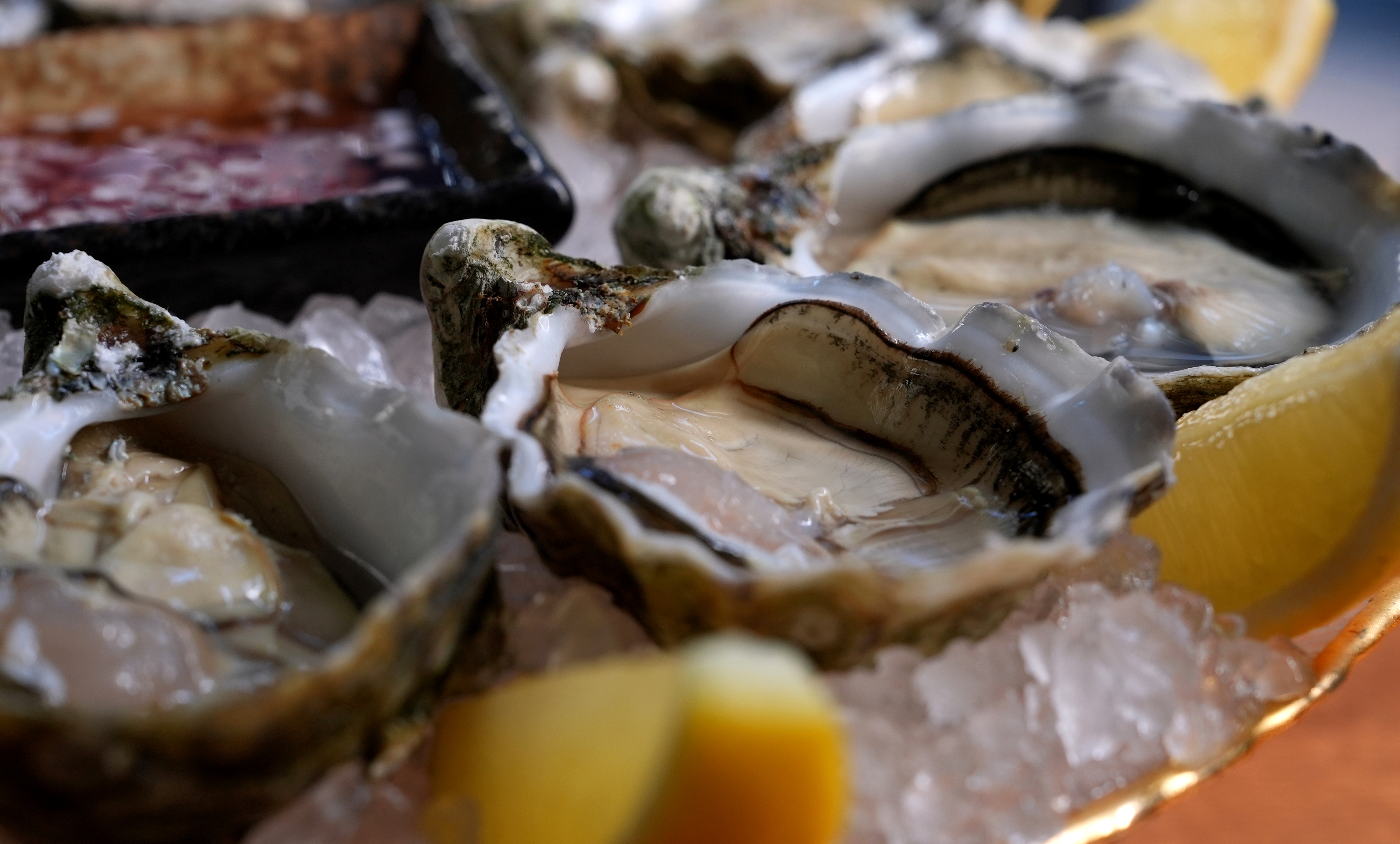
Two oysters can belong to the same species and, despite being almost identical in size, reveal remarkably different characters.
One may offer pronounced marine salinity with a lingering mineral finish. Another may feel softer, with gentle sweetness and an almost creamy texture.
The differences between them begin to take shape long before the oysters reach the restaurant.
And the story begins with water.
An Oyster and the Place Where It Grows
Oysters are filter feeders, drawing microscopic organisms from the water around them.
In different places, the sea creates different growing conditions.
Salinity, water temperature, movement, available food and cultivation methods all influence how an oyster develops.
There is even a word for this relationship: merroir.
Inspired by terroir in the world of wine, merroir describes how the marine environment becomes part of an oyster's character.
For oysters, geography can become part of flavour.
Salinity Is Only the Beginning
One of the first sensations we often notice in an oyster is its characteristic briny taste.
Oysters grown where marine influence is stronger can have a particularly pronounced ocean character. Where seawater mixes with more freshwater, salinity may be gentler, allowing other nuances to emerge more clearly.
Water plays a much greater role than simply giving an oyster its salinity.
Oysters feed on microscopic organisms carried by the water. Their availability and composition vary between locations and throughout the year, while tides and currents continually renew the conditions around them.
Cultivation methods play their part as well. Where and how an oyster grows can influence its development, shell shape and texture.
An oyster's character is therefore shaped by several influences working together.
How Can You Recognise These Nuances?
Discovering the flavour of an oyster begins with a few seconds of attention.
Try it first without lemon or sauce, allowing its natural character to reveal itself.
Notice the first impression. A briny taste often arrives first. Is it pronounced and distinctly marine, or softer and more restrained?
Then consider the texture. Is it delicate, creamy, firm or dense?
As the flavour develops, look for sweetness and umami — the savoury depth naturally associated with oysters.
Finally, notice the finish. It may be light and fleeting or more persistent, fresh and marine, gently sweet or marked by a mineral note.
There is no correct answer.
Simply pay attention to what you experience.
Compare Two Different Oysters
Perhaps the easiest way to understand merroir is to taste two oysters from different origins one after another.
In a direct comparison, the nuances often become surprisingly clear.
One may reveal stronger marine salinity while another feels creamier. One may impress with its delicacy, another with a firmer, denser texture. Their finishes can unfold differently too.
The more interesting question is simply: how are they different?
At that moment, the geographical name beside an oyster on a menu begins to carry more meaning. It becomes a clue to the waters where the oyster grew and the origins of its particular flavour.
Discover Oysters at Doorsea
The oyster selection at Doorsea offers an opportunity to explore different origins and compare their flavour profiles at the same table.
At Doorsea, we offer oysters at cost price. It is one of the special features of our restaurant and our way of giving guests more freedom to taste, compare and discover oysters from different regions.
Our current selection includes:
Gillardeau No. 2
Josephine No. 2
Tsarskaya No. 2
Woeste No. 2
Perle Blanche No. 2
Other varieties may join the selection depending on seasonal availability and fresh deliveries.
You might begin with an oyster just as it is, experience its natural character and then move on to another. In a direct comparison, the differences often reveal themselves naturally.
And somewhere among those different origins, flavours and textures, you may find an oyster that becomes a personal favourite.
During the warm season, the experience continues on Doorsea's spacious summer terrace in the quiet centre of Riga — a relaxed setting for oysters accompanied by champagne, sparkling wine or a carefully selected white wine.
The terrace is shared by Doorsea and Steaks Riga, allowing guests to choose dishes from both restaurants at the same table.
We will be glad to welcome you at Doorsea and continue the discovery together.
Discover oysters on the Doorsea menu
Doorsea Restaurant
Antonijas iela 9, Riga
+371 28 702 317